
Day Two of IDWS 2025 Cements Saudi Arabia’s Global Innovation Leader as Experts Tap into PPPs for a Safer Water Future
alignment with the environmental and economic goals
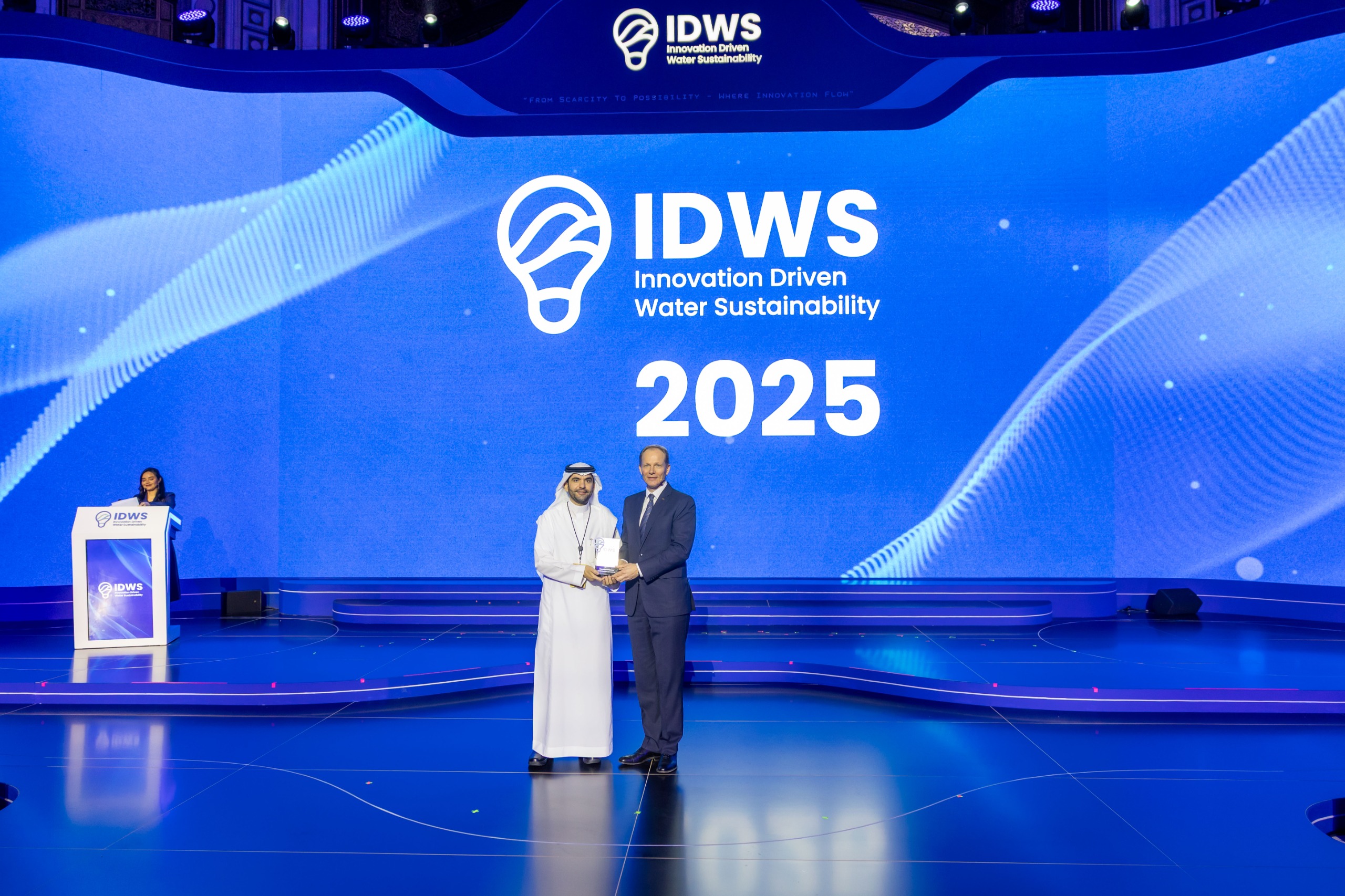
Industry experts gathered to highlight how organisations are seeking cross-sector collaboration,
Saudi Arabia and IDWS continued to serve as the hub for collaborative innovators
The Authority works to ensure water security through integrated planning
PUBLIC-PRIVATE PARTNERSHIPS CRUCIAL TO KEEP WATER FLOWING
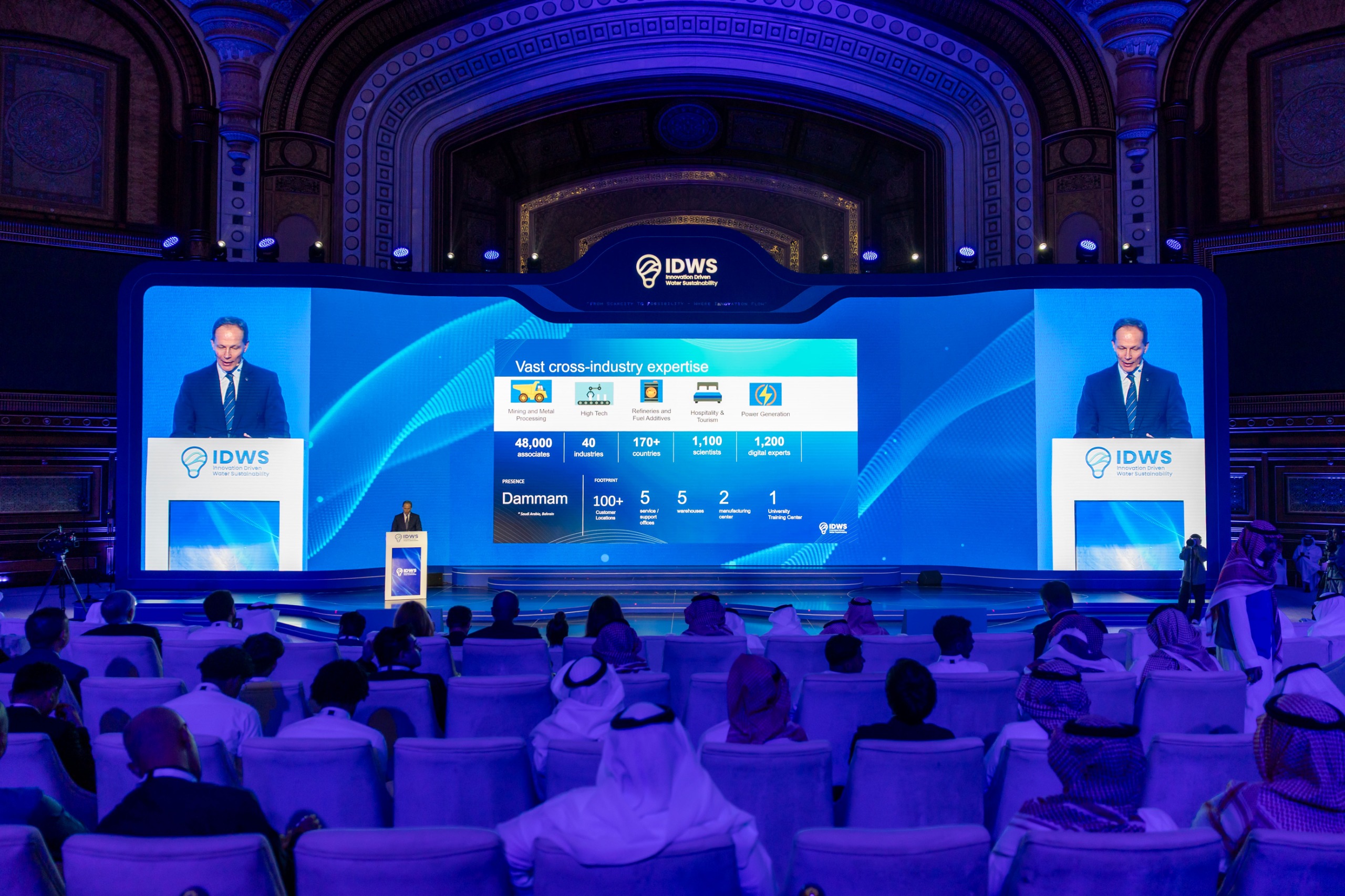
In the opening keynote session on the Main Stage, Bryan Harvey, Vice President ME at Jacobs, delivered a deep dive into the future of water in a session titled ‘From Scarcity to Sustainability: The Vision for a Water-Secure Future’. Harvey gave a strategic overview of global water security challenges and evolving strategies, including mega-projects, desalination advances, and the emergence of regional hubs driving water technology excellence across different continents.
Citing the River Thames Project in the UK as an example, he explained how it represents an innovative leap in urban water management, collecting excessive water from London’s drains and wastewater pipes to prevent pollution. Transported through a 24km tunnel, the water is treated, supporting a cleaner environment and a healthier city.
“Unique in its financing, the project brings together public and private sector investments to ensure sustainability. As the project continues, it unlocks further private sector investment and reduces the dependency on the public sector, highlighting its pioneering approach to funding large-scale infrastructure.”
Elsewhere, Khaled Almedbel, VP of Business Development at ACWA Power and Mohammed Alyousif, Executive Director - Business Development & Growth, Saudi Water Partnership Company, discussed how Saudi Arabia’s private sector is emerging as a global powerhouse in water infrastructure investment and,
with Vision 2030 as a catalyst, Saudi companies are driving innovation, efficiency, and sustainability in water projects worldwide.
When prompted with a question around how the water and power landscape in the Kingdom has changed in the past 10 years, Almedbel said: “The major transformation in relation to power and water is by seeing how different projects, the bidding process, and the needs are different compared to other international markets. We think and believe that every country should have a proper infrastructure, like Saudi Arabia, for example, through electricity, grid connection, and water pipelines. What we are seeing is that other countries might have grid connectivity, but no water pipelines, so when we go out to the international markets, seeing these differences, we have to identify what we are facing and how we can adapt to help deliver the needs.”
CHALLENGE IN BALANCING TECH ADOPTION WITH WATER CONSUMPTION
Meanwhile, a panel of industry leaders discussed smart city initiatives in a session titled ‘Blueprints for Smart Water Systems,’ during which they explored the transformative impact of SCADA systems, AI-based leak detection, and digital twin applications across water networks.
"We need to create a water-secure world. Water isn't just essential for life - it's the bedrock of economic growth, social progress, and climate mitigation," said Victoria Edwards, President & Founder of FIDO Tech.
The panel, also including Arthur Valkieser, CEO, Hydraloop; Dr. Sarper Sarp, Senior Expert, Saudi Water Authority; Asim Bhalerao CEO, Fluid Analytics; Christopher Gasson Executive Director, GWI, and Rashed AlAsmari, Executive Director, SWCC - examined how data analytics and AI are revolutionising water
management through real-time monitoring, predictive maintenance, and resource optimisation.
From IoT sensors detecting leaks before escalation to AI algorithms optimising distribution schedules, technologies are creating more resilient, efficient water networks while empowering utility companies and communities to make data-driven decisions that support sustainability and conservation efforts.
“I'm thrilled that water is finally getting the attention it deserves and attracting some of the brightest minds in technology. We're seeing talented professionals transition from AI and FinTech into the water sector, which is incredibly encouraging,” added Edwards.
Sam De Boo, Executive Vice President & President - Global Markets at Ecolab, meanwhile, had a stark warning for delegates around water consumption, and what scaling looks like to meet the demand, mostly being driven by artificial intelligence.
De Boo emphasized the urgent need to address AI's growing water footprint alongside Saudi Arabia's pioneering role in sustainable water management. "Water security isn’t a passing trend - it has been a national priority for decades," De Boo stated. "The Kingdom's proactive approach and visionary leadership in water efficiency positions Saudi Arabia at the forefront of global water innovations."
He also highlighted a critical challenge: by 2030, AI is predicted to consume as much water as it takes to meet the annual drinking water needs of the United States. "We can create more energy, but we cannot create more water," he warned, noting that the world's entire freshwater supply would fit into a 55km bubble - roughly the size of Riyadh's metropolitan area.
In another insightful session on the Main Stage, Mohamad Ali, SVP & Head of Consulting, at IBM, outlined how his firm is helping companies boost efficiencies and reduce costs through tried and trusted technology adoption.
Ali explained how his firm has reduced costs by USD3.5 billion by applying AI and ‘employing’ 3,000 digital workers. He added IBM Consulting had taken that approach to help companies improve business functionality, highlighting a case study in which they used AI to help a company check its pipelines, reducing blockages by 60%.
He went on to announce how IBM Consulting is working with SWA on a new platform titled the ‘H₂O Platform,’ which is analysing water assets across the board, from production through consumption to recycling, in order to boost efficiencies.
INNOVATIVE REPLICAS OF NATURAL SYSTEMS ARE KEY TO CLEAN WATER
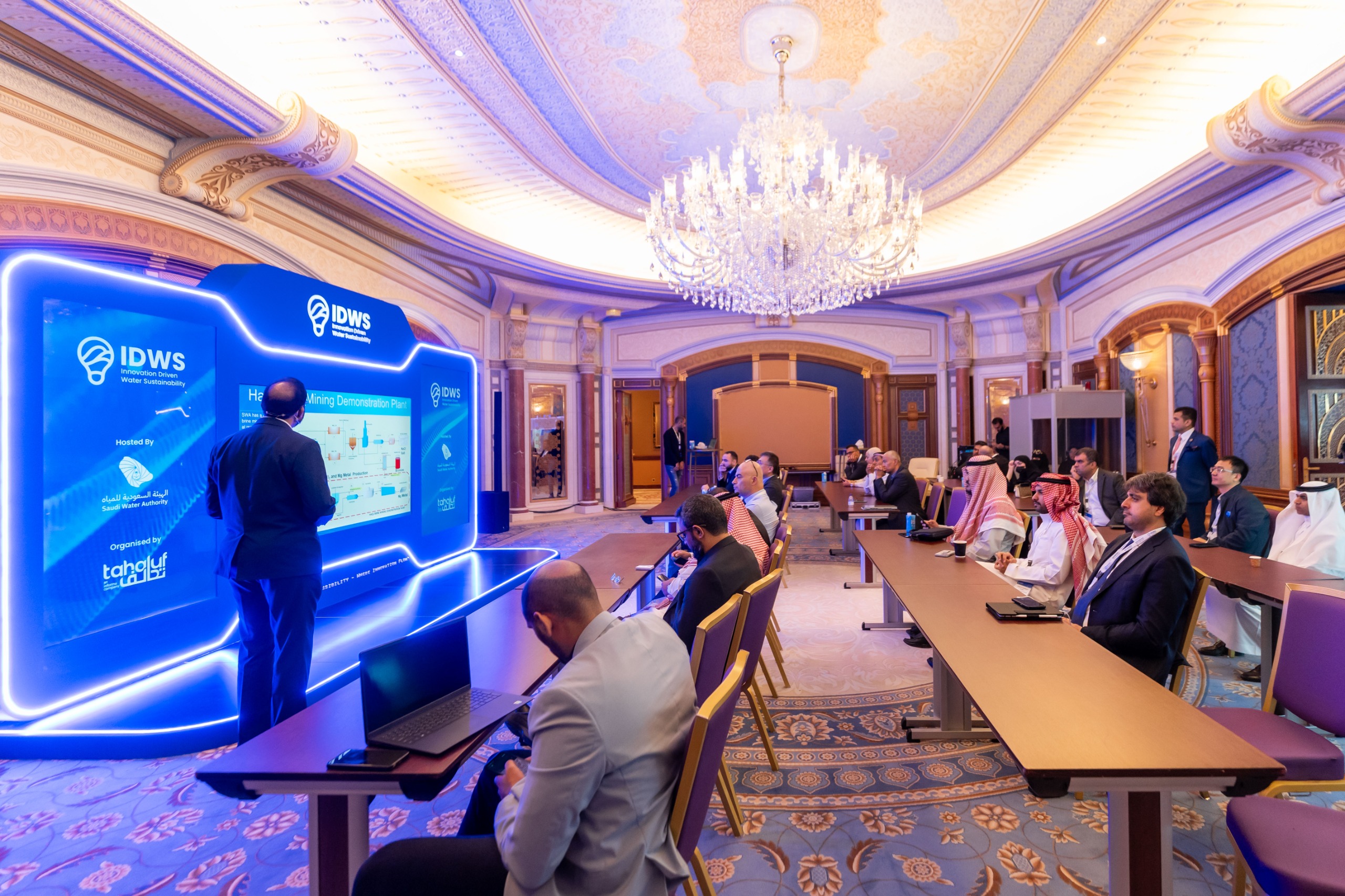
A series of technical briefings on day two examined the circular use of by-products and robust monitoring systems – from MgO cement production from desalination brine to data-driven methods that enable efficient operations.
Dr Ibrahim Hendy, CEO of Water Engineering and Environmental Consultations and an Associate Professor at Zagazig University in northern Egypt, delivered one session, detailing the intricacies of constructed wetlands and how they mimic natural systems by using layers of sand and gravel to treat wastewater through filtration, Dr Hendy explained how the Middle East has seen limited adoption because early designs copied directly from Europe were not adapted to regional conditions. Now, having run a pilot in Egypt where climate conditions and wastewater characteristics closely resembled that of rural Saudi Arabia, a direct comparison is finally possible.
Katherine Nightingale, Global Director of International Affairs at WaterAid, later looked into the climate trends and vulnerabilities of some of the world’s most populated cities, including Nairobi, which suffers precarious droughts and flooding. With seasonal rains falling in Jeddah this week and causing issues, the data and insights Nightingale shared on the relationship between drought, flooding, and groundwater absorption proved timely too, hailing IDWS 2025 as a platform for invaluable learning for mayors, city planners, and governments.
“At a conference like this, this kind of data is also a real asset to businesses, financiers, and banks thinking about where they want to be working and where they think investment is needed,” she said. “These cities are places where people are overwhelmingly working, so there are huge amounts of economic growth and development opportunities. Solving these problems is going to be a key driver of that opportunity.”
MOU SIGNINGS SET ROADMAP FOR COLLABORATION TO SAFEGUARD WATER
Saudi Arabia and IDWS continued to serve as the hub for collaborative innovators to agree on forward-focused actions to safeguard water with a host of MoU signings. Saudi Water Authority (SWA) and Saudi Accreditation Center led the way with an MoU to strengthen joint cooperation in regulating and enhancing the water services sector, while SWA signed another agreement with Gasco (National Gas & Industrialization Co.) to share expertise and improve the efficiency of brine / discharge management. SWA signed further agreements with GI Aqua Tech for Environmental Services, Tamimi Energy, Spectromarine, Alkhorayef Water Technologies - with the aim to enhance operational performance and service.
Meanwhile, Intalmatch Chemicals and Intellisense agreed on a partnership focused on AI-driven optimization of RO desalination and chemical processes.
A spokesperson for Italmatch Chemicals said: “Through this agreement, we are localising key chemicals used in membrane pretreatment and combining them with advanced technical support to deliver the most efficient desalination performance for SWA. Partnering with Intellisense enables us to bring AI-driven optimisation together with our chemistry expertise to create a smarter, more sustainable solution for the Kingdom’s water sector,”
“At Intellisense, we specialise in real-time industrial optimisation using artificial intelligence, and we are already supporting critical industries in Saudi Arabia, including mining and water preservation. Our partnership with Italmatch is unique because it brings chemistry and AI together for the first time in an integrated desalination solution, helping SWA and other stakeholders enhance reliability, reduce costs and safeguard precious water resources,” added a company spokesperson.
Eng. Mohammed AL Sheikh. Deputy for Strategic Partnerships and Local Content at SWA, said: “Day two of IDWS 2025 amplified the Kingdom’s progress in fostering and applying world-class solutions to solve current, and future, water challenges - from cross-sector partnerships to circular water initiatives; from residuals management and enhanced monitoring to transparent ESG reporting. Once again, the Kingdom is providing a platform for real-world action and the milestones discussed and marked this week underscore Saudi Arabia’s steadfast commitment to impactful implementation and to building a resilient water future for all.”
Basma Dawwas, Event Director at Tahaluf, said: “Our goal with SWA for IDWS was to ignite meaningful, solutions-driven progress to a pressing global challenge. We’ve built an environment where innovators come together with forward-thinking concepts that inform and drive momentum. Day two continued this energy, bringing together innovators, financiers, and government leaders to forge partnerships that can redefine global water sustainability standards.”
IDWS 2025 will enter its final day on Wednesday, with the agenda shifting to converting pressing global water challenges into new opportunities for growth, innovation and long-term resilience. The closing day will demonstrate how Saudi Arabia remains at the forefront of this transformation, championing bold ideas and practical solutions that accelerate change across the global water sector.
For more information and to register for a complimentary conference pass, please visit: https://idwsc.com
– End –
About the Saudi Water Authority (SWA)
The Saudi Water Authority is the national entity responsible for regulating, developing, and sustaining the water sector in the Kingdom. The Authority works to ensure water security through integrated planning, the application of global best practices in water resource management, the promotion of research and innovation, and the strengthening of public-private partnerships. The Authority aims to achieve high operational efficiency and improve service quality in alignment with the environmental and economic sustainability goals of Saudi Vision 2030.
About the Innovation Driven Water Sustainability Conference (IDWS)
IDWS is the leading event in the Arab region and the Gulf, bringing together policymakers, experts, and innovators to accelerate sustainable water solutions through investment, policy development, and innovation. The conference has become a key platform for international cooperation and showcasing advanced technologies, with hundreds of speakers and thousands of participants from around the world.
Deepra Ahluwalia
Action Global Communications
+971 564770995
email us here
Legal Disclaimer:
EIN Presswire provides this news content "as is" without warranty of any kind. We do not accept any responsibility or liability for the accuracy, content, images, videos, licenses, completeness, legality, or reliability of the information contained in this article. If you have any complaints or copyright issues related to this article, kindly contact the author above.
